


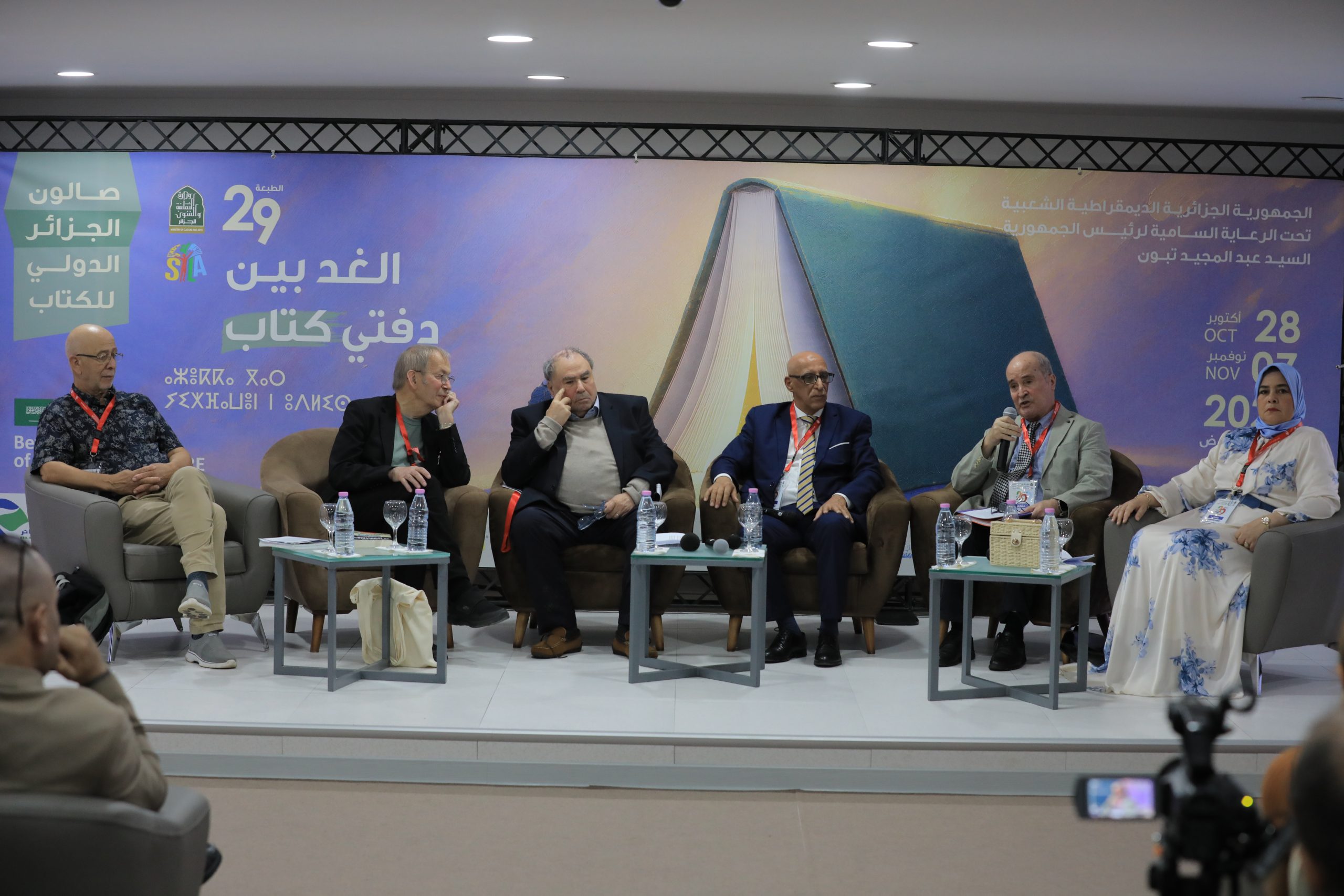
Following this tribute, the discussion turned to the centenary of the Étoile Nord-Africaine, founded in Paris in 1926.
Opening the panel, Benjamin Stora described the organization as « a turning point in the history of contemporary Algerian nationalism », emphasizing its contribution to the emergence of the demand for independence.
According to Stora, its creation occurred « at the intersection of several dynamics: Algerian labour migration to France, the defence of Muslim identity, the international communist movement and opposition to colonial rule. »
In the aftermath of the First World War, the arrival of large numbers of Algerian workers in France, particularly in factories and mines, encouraged the emergence of new spaces for social interaction and political mobilization.
« Algerian immigration is therefore not merely a story of work, poverty or displacement; it is also a political history, » Stora observed.
He highlighted the paradox of an independence movement that took shape on the very territory of the colonial power.
The development of the ENA, founded on June 2, 1926, gradually led to the emergence of a clearly defined national independence project, particularly under the leadership of Messali Hadj.
His participation in the Anti-Imperialist Congress held in Brussels in February 1927 represented, according to Benjamin Stora, a decisive moment.
The programme presented at the congress « called notably for Algeria’s independence, the abolition of the Code de l’indigénat (colonial legal code), equal political and trade union rights, the restitution of confiscated land, and freedom of the press, association and assembly. »
Historian Christian Phéline drew attention to another defining moment in this historical trajectory: the rally held on August 2, 1936, at the municipal stadium in Algiers, which attracted nearly 15,000 people.
Organized in the context of the Algerian Muslim Congress, the gathering provided Messali Hadj with an opportunity to present the demands of the Étoile Nord-Africaine publicly before a large audience.
Phéline emphasized that this speech marked an important stage in spreading the demand for independence within Algeria itself.
While the organizations involved in the Muslim Congress primarily advocated democratic, political and social reforms, Messali Hadj asserted a distinct political position, refusing to allow the demand for equal rights to replace the aspiration for national independence.
The historian recalled Messali’s symbolic gesture of holding up a handful of soil and declaring: « This land is not for sale. »
According to Phéline, the rally represented a « moment of rupture » in the history of the Algerian national movement.